
North Dakota State University: Agricultural and Biosystems Engineering Dept.

- Project Coordinator: Dr. Xinhua Jia
- Our project titled the "Effect of Optimal Water Management for Sustainable and Profitable Crop Production and Improvement of Water Quality in Red River Valley" is funded through the Sustainable Agricultural Research & Education (SARE) grant.
Wednesday, July 6, 2022

Tuesday, June 28, 2022


Friday, June 24, 2022


Wednesday, June 22, 2022


Monday, June 6, 2022


Tuesday, March 29, 2022
Experiments of hydroponically growing Admiral pea shoots
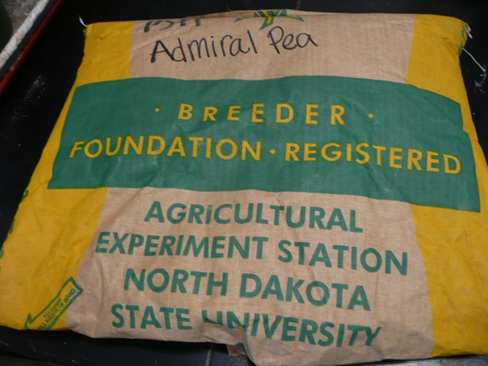 |
| Admiral peas bred by Agronomy Seed Farm (ASF) of NDSU Agriculture and Extension in Casselton, ND were used in our hydroponic experiments. |
 |
| The seeds were washed and socked in warm water for 5 hours. |
 |
| The seeds were kept in dark for the germination. It's sprayed using room temperature water twice a day. |
 |
| When seeds growing sprouts and long roots, they were moved under light for quick growing. After about two weeks, the pea shoots were ready for 1st harvesting. It may be harvested for second time. |
Testing and Calibrating the Hunter HPC-400 irrigation controller with Soil-Clik soil moisture module
 |
| Hunter HPC-400 irrigation controller with Soil-Clik soil moisture module will be used in two projects of remote-controlled automated irrigation with mulch for the production of specialty crops in Absaraka and Oakes, ND. This experiment is designed to determine the thresholds set in the control module to start irrigation at different soil moisture levels. |
 |
| A Campbell Scientific CR1000 datalogger and a AM416 multiplexer are used to monitor and record the data of soil water potential, soil moisture and soil moisture in the above mentioned experiment. |
Friday, November 12, 2021
Creating soil moisture release curves for the Oakes and Absaraka Sites

 |
| METER WP4C (measurement range: 0 to -300 MPa) |
 |
| Soil Moisture Release Curve (HYPROP 2 + WP4C) |
Monday, October 11, 2021
Utilizing remote-controlled irrigation for high tunnel tomato and pepper productions in ND
 |
| Our proposal titled "Utilizing remote-controlled irrigation for high tunnel tomato and pepper productions in ND" has been selected and funded. Above picture shows the field visit in NDSU Horticulture Research Farm in Absaraka, ND on 08/26/2020. |
 |
| The high tunnel to be used for the project. |
Preparation for the automated irrigation for commercial production of watermelon, squash, and muskmelon cultivars in Oakes
 |
| Our proposal titled "Automated irrigation for commercial production of watermelon, squash, and muskmelon cultivars in Oakes" has been selected and funded. During the visit in NDSU Oakes Irrigation Research Site on 09/28/2021, Dr. Thomas Scherer checked the flow rate and pressure of well flow to be used for the irrigation. A Panametrics ultrasonic flow meter was used in the flow measurement. |
Wednesday, September 15, 2021
It's time to harvest


Watermelons from the buffer row were harvested to distribute in the Agricultural and Biosystems Engineering, NDSU.
Monday, July 19, 2021

Monday, April 19, 2021
Automated Drip Irrigation with Mulches for the Tomato and Watermelon Production in North Dakota 2019-2020
 |
| Seeds Sangria Hybrid Watermelon and Hybrid Determinate Tomatoes Celebrity F1) grew in NDSU Agricultural Experiment Station (AES) Research Greenhouse Complex. |
 |
A
subcompact raised bed mulch layer had been used to lay the mulches and drip
tapes underneath simultaneously. |

 |
| A complete randomized split plot design in 2020. This two-year field experiment was conducted in a research farm located in the southwest corner of NDSU campus. Two irrigation control boxes were used for the watermelon and tomato separately. |
 |
| Four irrigation control settings were in each control
box for the plots of clear plastic, black plastic, landscape fabric and no
mulch. The Hunter node 100 was to control the start/end time and duration of
irrigation. The plot soil moisture signal read by the Irrometer watermark
electronic module (WEM-B) was to compared with the desired wet/dry level to
determine if irrigation should be triggered. A flow meter with a datalogger was
to record the irrigation flow data. |
 |
| Five watermelon or six tomatoes were planted in each 25ft long plot with two parallel drip tapes installed. |
 |
| Cameras were installed to monitor the growth and dataloggers in the white enclosures were to record the soil water potentials and temperatures in the plots. |
 |
| Field visit and discussion. |

 |
| Harvested watermelon and tomatoes to be tested in lab. |
Wednesday, October 18, 2017
Deep Core Sampling away from the Tile to Investigate the Changes of Soil Properties


 |
| Changes in soil chemical and physical properties are determined by deep soil core sampling. A backhoe is used to completely expose the tile line during sampling. One sample is taken right above the tile and nine samples are taken at 8, 16, 32 inch away from the tile in a radial pattern. The collected soil samples from three sites will be sent to NDSU Soil Testing Lab for analysis. |
Tuesday, April 12, 2016
Expanding Your Horizons at NDSU
 | ||
| Expanding Your Horizons is a nationwide organization that holds regional conferences for young women in grades 7-9 to encourage and develop their career interests in science, technology, engineering, and math (STEM) in an effort to overcome a history of limited participation by women in these career fields. As shown in above picture, students Anne Gatzke and Hannah Bye demonstrated irrigation and drainage to 9 middle and high school girls in our research lab during the event organized by NDSU on April 9, 2016. |
Monday, December 7, 2015
Crop Yield Estimation
 |
| Graduate student Qiang Li is using a corn sheller to thresh corns. |
 |
| After threshing, Qiang is measuring the corn weight and moisture for yield estimation. |
Subscribe to:
Posts (Atom)